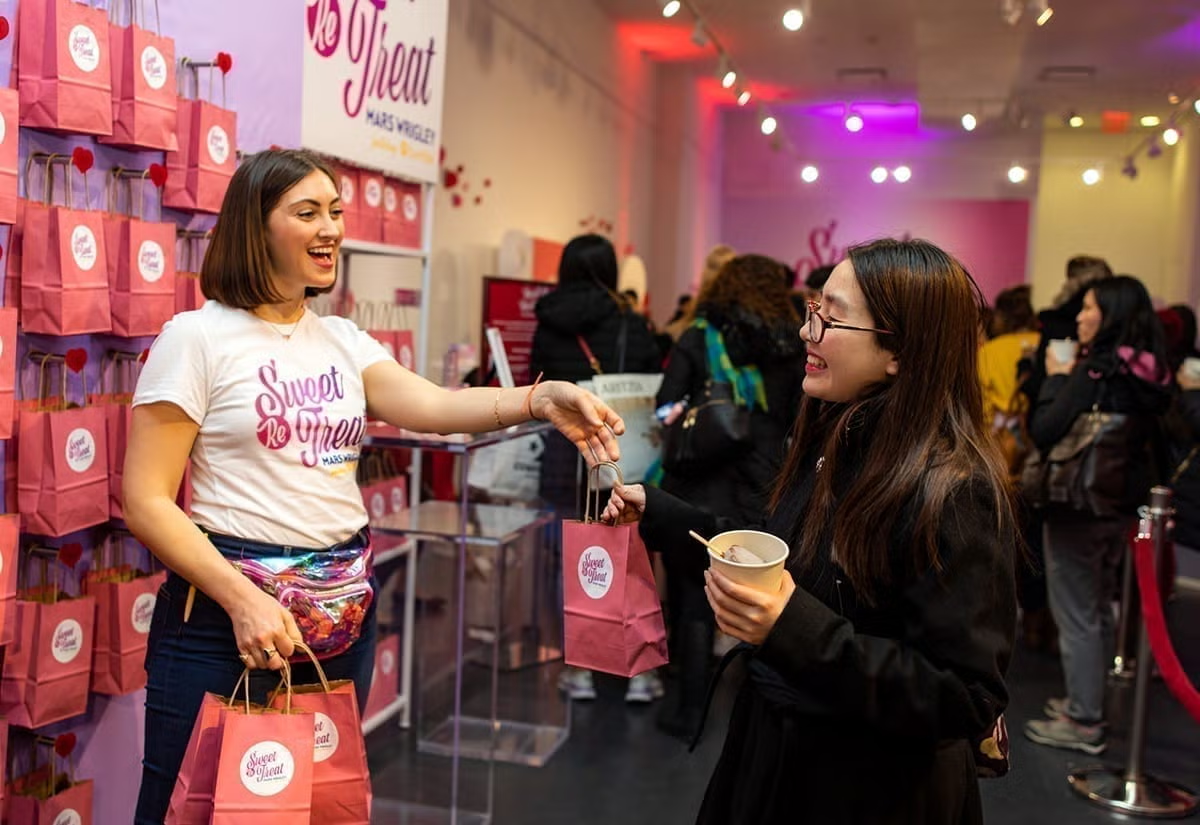
Brand activity has moved from basic logo placement and sponsorships to highly orchestrated, immersive experiences. Experiential marketing is now a central discipline, allowing brands to communicate values and positioning through physical encounters rather than static messages. Drone displays above landmarks, multi-sensory sanctuaries in urban centers, and pop-up spas in luxury hotels function as strategic media investments. The physical world has become a programmable surface in which attention is captured by the quality and depth of the experience, not only by the number of impressions it generates.
Location has become a key narrative tool. While stadiums and convention centers still matter, brands are increasingly drawn to environments with cultural, emotional, or historic significance. Activations near or within iconic sites, such as ancient stone circles, historic baths, or dramatic natural landscapes, borrow the symbolism embedded in those places. The setting shapes the perception of the event, adding gravitas that a constructed set rarely matches. In these cases, the site effectively becomes a co-author, contributing meaning as well as visual impact.
Using culturally important locations as stages introduces ethical and regulatory complexity. Heritage agencies, local communities, and regulators scrutinize proposals to ensure preservation and respect. Public reaction often reflects a tension between appreciation for creative spectacle and concern about commodifying or trivializing sacred or protected sites. Brands operating in this space typically work with local authorities, incorporate educational or philanthropic elements, and present the event as a form of stewardship rather than a simple takeover. The site is treated as a stakeholder whose integrity must remain intact.
Alongside the fascination with heritage and symbolism, wellness has become a dominant motif in brand experiences. Companies are developing programming around rest, recovery, and mental clarity instead of relying solely on high-energy parties. Wellness-themed activations—such as yoga gatherings, hydration stations, and self-care clinics—are being used to reach audiences who prioritize health and stress management. This shift reflects broader cultural attention to mental health, burnout, and holistic wellbeing. Spectacle is measured increasingly by how restored participants feel when they leave, not just by visual drama.
Pop-up spas and traveling wellness lounges demonstrate this transition. Beauty and wellness brands assemble temporary sanctuaries in malls, hotels, and event venues, offering treatments, cold plunges, guided breathwork, and short-form therapies. Guests move through sequences of calm lighting, considered soundscapes, and tactile rituals. These itinerant spaces resemble touring roadshows, but the emotional pitch is quieter. The brand becomes associated with recovery and replenishment rather than with noise and overstimulation.
Luxury skincare and cosmetics brands are extending their spa philosophies beyond permanent locations through retreats on ships, trains, and resort partnerships. Treatments are combined with curated journeys featuring movement, nutrition, and sleep programs. Limited-time spa concepts inside resorts blend local materials and customs with proprietary techniques. The logic is straightforward: if a product promises renewal, an immersive environment can make that promise tangible. Guests experience the idea of radiance and restoration at every stage of the journey.
Athletic and athleisure labels are also stepping into spa and recovery territory. During high-profile cultural events, some sportswear and yoga brands host curated spa programs within luxury hotels, combining movement classes with saunas, cold plunges, and guided recovery sessions. This allows them to present themselves as holistic lifestyle partners rather than apparel suppliers alone. Performance is framed as the outcome of both exertion and intentional rest, with aspiration centered on sustained, well-supported readiness.
Sensory design underpins many of these initiatives. Brands are carefully modulating sound, scent, texture, temperature, and light to shape emotional responses and improve recall. Spa-style activations employ warm or neutral palettes, soft textiles, slow soundtracks, and botanical or mineral fragrances to calm the nervous system. The environments are constructed to foster safety and receptivity rather than simple visual appeal. In larger theatrical contexts—such as outdoor wellness festivals or events near heritage sites—layered sensory cues help unify the experience into a coherent emotional arc.
Many of these concepts draw explicitly on ritual. Historic monuments embody shared memory; spa rituals reflect cleansing and renewal. Brand experiences increasingly mirror ceremonial structures, guiding guests through stages of arrival, preparation, transformation, and integration. Even without religious language, these frameworks echo traditional rites of passage and offer secular spaces for reflection. In societies where such structures have weakened, these experiences can provide meaningful containers for personal reset, as long as their symbolic references are treated with care.
The economics of such elaborate experiences rely on more than direct sales. Experiential campaigns can generate revenue through bookings, on-site purchases, and bundled hospitality, but their primary value often lies in brand equity and word-of-mouth. Immersive activations create lived memories that are difficult to duplicate and can fuel user-generated content and media coverage. Spa partnerships and wellness retreats integrate high-margin services and retail, improving the potential for return on investment and building deeper customer relationships over time.
However, when heritage or spiritual symbolism is involved, the risks increase. Misjudged events can trigger backlash if they appear to exploit or damage sensitive sites or exclude local voices. Responsible brands embed consultation, environmental protection, and transparent communication into their planning. Financial support for conservation or education can be part of a broader narrative of care. At the same time, there is heightened scrutiny of “wellness-washing,” where wellness rhetoric is used without genuine commitments to participant or staff wellbeing, and of cultural borrowing that slips into appropriation. Working with qualified practitioners and local communities, and setting realistic expectations around outcomes, helps mitigate these concerns.
Measurement frameworks for these experiences extend beyond social-media impressions and attendance. Teams track dwell time, repeat visitation, conversion to bookings or sales, and shifts in sentiment. Metrics are aligned with objectives such as lead generation, sampling, loyalty, and advocacy. In spa collaborations, useful indicators include treatment occupancy, retail attachment rates, and satisfaction scores. For heritage-linked activations, awareness, earned media value, and sentiment analysis become more central. Systematic measurement enables refinement and distinguishes surface-level spectacle from deeper impact.
Designing for accessibility and psychological safety has also become critical. Not every visitor is comfortable with intense sensory input, enclosed spaces, or demanding physical experiences such as ice baths. Thoughtful activation design includes quiet areas, clear consent protocols, and multiple participation options. Staff are trained to support different physical and emotional needs. Inclusive design improves both ethics and effectiveness, increasing the likelihood that guests leave with positive, long-lasting associations.
Technology now plays a visible but carefully managed role. Projection mapping, responsive installations, and multi-sensory theaters are used to extend or reframe physical spaces. In wellness contexts, this can mean guided meditations with adaptive lighting and sound, or augmented reality that transforms a simple room into a forest or imagined temple. The aim is not to overwhelm, but to deepen immersion and personalization, adjusting elements in real time to individual responses.
Looking ahead, brands appear to be moving toward fewer but more ambitious experiences that function like curated journeys or modern pilgrimages. Ancient monuments, remote desert or mountain spas, urban bathhouses, and traveling sanctuaries will likely continue to serve as stages for these efforts. The continuum from sacred stones to soothing spas captures the range of approaches, from highly dramatic stunts in symbolic locations to modest, personal rituals of care. When executed with rigor and humility, such experiences can generate more than fleeting visibility. They can create memories that feel both extraordinary and genuinely restorative in a crowded, high-noise world.